
Back in 2021, there was a race between two of the wealthiest men in the world, Jeff Bezos and Richard Branson, on who could get into space first. Even though the headlines read that Branson got into space first, Bezos was technically the only one who actually reached space at all. It’s all because of the Kármán line.
The distance at which one reaches space has a number of definitions. For example, the Fédération Aéronautique Internationale (FAI) defines it as 100km (62 miles) above the Earth’s surface, but the US Armed Forces describe an astronaut as a person who has ascended 80km (50 miles).
Using this US Armed Forces definition means that yes when Branson rose through the atmosphere to a height of 89.9kn (55.9 miles) he became an astronaut, but using the international definition of space, the Kármán line, it was only Bezos on his Blue Origin flight, soaring to a height of around 107km (66 miles).
Whilst the boundary between the Earth’s atmosphere and space is of course a blurred one, much of the international scientific community agrees on the 100km Kármán line, but, as it is with many ‘international’ measurements, does not apply to the US.
When looking to revere those who have sadly passed away in space, these two competing distances give difficulty when answering the question “how many people have died in space?” Due to these competing measurements, the number varies from 19 souls lost to a low of just 3 – all of which I have listed at the end of this article.
To discuss those who have passed away above the Kármán line, we need to discuss the world’s first space station, Salyut 1.
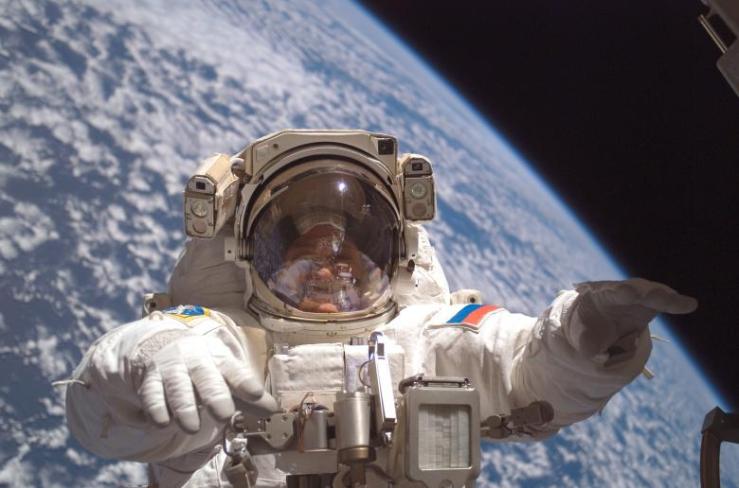
Both astronaut and cosmonaut mean the same thing, a person who has explored space, yet they both have differing word origins. Cosmo- comes from the Greek word kósmos meaning universe, whilst Astro- is from the Greek ástron meaning star. Both of these end with -naut, coming from the Greek naútēs, meaning to sail. So I guess you could say astronauts are sailing the stars whilst cosmonauts sail the entire university.
Soon after the first man walked on the Moon, the Soviet Union later changed focus to securing more world’s first to add to their ever-growing list of (and this is a long list) the first dog in space, the first man in space, the first woman in space, the first satellite to enter orbit, first human-made object to hit the moon and the first space walk; the Soviet Union wished to make a livable habitat for humans in space, and thus began the development of the Salyut 1 space station.
20 metres long and 4 metres wide, the space station was developed to test the capabilities of humans living in space as well as conduct scientific experiments. Launched on April 19th 1971, the Soyuz spacecraft housing a crew of three docked and joined Salyut 1, two months later on the 6th of June 1971. Cosmonauts Georgi T. Dobrovolski, Vladislav N. Volkov, and Viktor I. Patsayev headed off in a Soyuz rocket and on the 7th of June, they began their 22-day stay in space (during which Patsayev celebrated his 38th birthday), setting yet another record.
In the mind of the cosmonauts, June 6th should have been etched in their minds as the day that they set off to show the world what human ingenuity can achieve. However, unbeknownst to the cosmonauts, June 6th would be the last time they stepped foot on Earth alive.
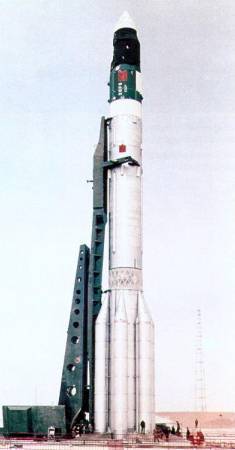
June 29th, the day of their return from Salyut 1, Soyuz 11 was preparing to dock from the space station when a light on the spacecraft indicating an unsecured door seal, began flashing. The cosmonauts worked to clear any debris jamming the door, but after repeated attempts to seal the door, the flashing light remained. Both the ground team and the cosmonauts came to the agreement the light was malfunctioning and decided to begin their slow drift back to Earth.
During its descent in the early hours of June 30th, the spacecraft orbited Earth three times before igniting its retrorockets to slow its decline. 168km (104 miles) above the Earth, the communications between the cosmonauts and engineers on the ground stopped. The detaching of the descent module from the service module was supposed to occur due to sequential pyrotechnics, but unfortunately, they all fired at once. This dislodged a seal in the pressure equalisation value and the cabin depressurised. The cosmonauts, noticing the issue, worked to fix it. Two minutes later, they sadly passed away from asphyxiation.
Autonomously, the capsule continued its descent. The parachutes were spotted not far from the planned landing site. The soft boost rockets ignited, and the cosmonauts finally returned home. Rescuers ran to the spacecraft, opened the capsule and discovered the bodies of Dobrovolski, Volkov, and Patsayev. Resuscitation efforts began but were all in vain.
On July 1st, in Red Square, the fallen cosmonauts received a state funeral visited by thousands willing to pay their respects. They were later cremated and interred in the Kremlin Wall, near a fellow lost cosmonaut, Vladimir Komarov, who passed away in the Soyuz 1 when a parachute failure meant an uncontrolled descent to the ground. Vladimir Komarov was the first human to die in spaceflight.
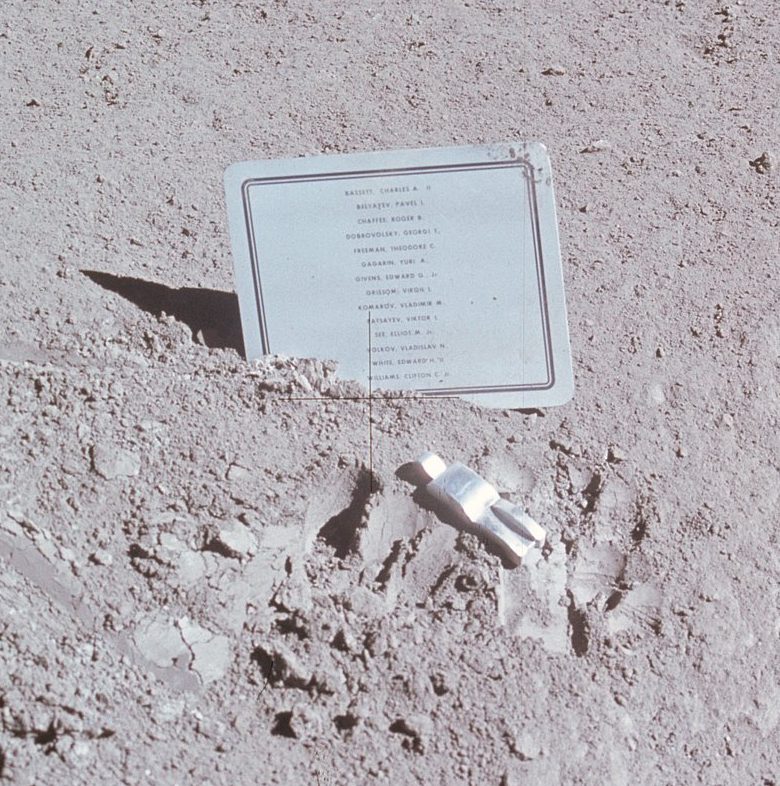
To commemorate the loss of life in the pursuit of the final frontier, astronaut David Scott met with artist Paul Van Hoeydonck who created a statuette and small plaque listing the names of American astronauts and Soviet cosmonauts. Prior to the launch of Apollo 15, Scott met with top Apollo officials to take it on board and for it to be left on the moon post-return. The announcement of the commemorative plaque was made shortly after Apollo 15’s return. When placing the memorial on the moon’s surface, David Scott did not say a word, and later recalled the following:
“We made a plaque for all the astronauts and cosmonauts that had been killed. And a little figurine, a Fallen Astronaut, and we put it right by the Rover. You can see it in the picture. That was just a little memorial, in alphabetical order. In relative terms, we had both lost a lot and, interestingly enough, we didn’t lose any more after that until Challenger. That’s what I was doing when I said I was cleaning up behind the Rover. Jim knew what I was doing. We just thought we’d recognize the guys that made the ultimate contribution.”
The Fallen Astronaut remains the only art piece on the surface of another celestial body, besides Earth.
The deaths upon Soyuz 11 were the only deaths to have occurred above the Kármán line and therefore the only deaths to have officially occurred in space, according to the FAI. However, it is important to pay respects to all those to have perished in space – regardless of who drawers the lines. Below, I have placed the names of all those whose souls have given their lives to science in the pursuit of touching the stars.
- Cosmonauts:
- Georgy Dobrovolsky – 30th June 1971
- Viktor Patsayev – 30th June 1971
- Vladislav Volkov – 30th June 1971
- Vladimir Komarov – 24th April 1967
- Astronauts:
- Rick D Husband – 1st February 2003
- William C McCool – 1st February 2003
- Michael P Anderson – 1st February 2003
- David M Brown – 1st February 2003
- Kalpana Chawla – 1st February 2003
- Laurel Clark – 1st February 2003
- Ilan Ramon – 1st February 2003
- Gregory Jarvis – 28th January 1986
- Cristina McAuliffe – 28th January 1986
- Ronald McNair – 28th January 1986
- Ellison Onizuka – 28th January 1986
- Judith Resnik – 28th January 1986
- Michael J Smith – 28th January 1986
- Dick Scobee – 28th January 1986
- Michael J. Adams – 15th November 1967
sources.
Apollo 15 map and Image Library (2020) NASA. NASA. Available at: https://www.hq.nasa.gov/alsj/a15/images15.html#11893.
Baker, P. (2007) The story of Manned Space Stations An Introduction. New York, NY: Springer New York.
Hammer and feather (2020) NASA. NASA. Available at: https://www.hq.nasa.gov/alsj/a15/a15.clsout3.html
Mars, K. (2021) 50 years ago: Launch of Salyut, the world’s first space station, NASA. NASA. Available at: https://www.nasa.gov/feature/50-years-ago-launch-of-salyut-the-world-s-first-space-station/
Mars, K. (2021) 50 years ago: Remembering the crew of Soyuz 11, NASA. NASA. Available at: https://www.nasa.gov/feature/50-years-ago-remembering-the-crew-of-soyuz-11/ (Accessed: January 24, 2023).
Ocampo, R.P. (2014). Limitations of spacecraft redundancy: A case study analysis. 44th International Conference on Environmental Systems.
 inquestion.
[…] Inquestion,SpaceSafetyMagazine, USA […]
LikeLike