
Polio was once a scourge upon the world but through the selflessness of one individual, Jonas Salk, polio is on its way to being pages in a history book.
Poliomyelitis, more commonly known as polio, is a disease caused by the poliovirus. It is mainly spread through improper hygiene and contaminated water from faeces. It can sometimes be spread through small droplets in the air, known as aerosols, but this is less common. Many who are exposed to polio, around 75%, will feel no symptoms at all. Those who do develop symptoms often feel flu-like symptoms of a sore throat and a fever. For 1% of those who catch polio, it can be devastating.
If the virus moves from your gastrointestinal tract to the central nervous system it begins to destroy neurons. Here, if polio has spread to the legs, sufferers may find it difficult to walk which results in muscle degradation. Moving to the membranes surrounding your brain, the meninges, can cause headaches, fever and vomiting.

The iron lung is a negative-pressure mechanical ventilator that works by decreasing and increasing pressure inside an iron chamber. Decreasing the pressure causes the chest to rise and pull air into the lungs. The pressure in the chamber is then reversed, causing the pressure in the chest to rise and the air to be forced out of the lungs. Due to their size, patients become immobile and must lie vertically until their body recovers. A mirror is placed to allow the patient to converse whilst inside the chamber.
Typically though, many who think of polio may often think of the ‘iron lung’; this is due to the disease spreading to the diaphragm, or other breathing muscles, causing patients to suffocate due to muscle atrophy and eventually succumb to the disease.
Evidence of polio has been found over 3500 years ago in ancient Egypt with the artefacts showing priests and pharaohs with one leg shorter than the other, and needing canes to remain upright and mobile. Despite the ancience of the disease, the suspected peak of the disease came in 1916 with almost 7,000 deaths in the US alone. The epicentre of the disease was seemingly New York City, with almost 30% of US deaths occurring in the city.

During the epidemic, thousands of people left the city (inadvertently spreading the virus across the country), and museums, theatres, swimming pools, theme parks and restaurants were closed in order to contain the virus. Whilst successfully limiting the spread of the disease, the US continued to have regular outbreaks in the years after 1916, with 1949 being perhaps one of the worst with the disease taking another 3,000 lives.
In the UK, public health officials were seeing the disease more and more each year. In 1947, the case rate was estimated as 18 per 100,000, with almost 8,000 recordings of the disease. This was four times higher than it was a decade earlier. Two years after this, however, there was a decrease in the number of those developing the disease during infanthood. It was theorised that children had been exposed to it in earlier outbreaks and therefore developed an immunity to the disease. Observations like this made the objective clear. In order to get a grip on the disease and eradicate it, a vaccine was needed.
The first successful vaccine to combat Polio was developed in the late 1940s by the Polish scientist Hilary Koprowski. This was a live attenuated vaccine that had been shown in studies in rats to effectively inoculate against the disease. When the oral vaccine was given to an 8-year-old boy in 1950, it was clear that the US had chosen to fund the development of an inactivated polio vaccine developed by the American scientist, Jonas Salk. This was mainly due to fears of safety when using live vaccines. To continue his research Koprowski continued in Poland and Africa (particularly the Congo) where he became the eventual background for numerous conspiracy theories – this will be discussed at another time.
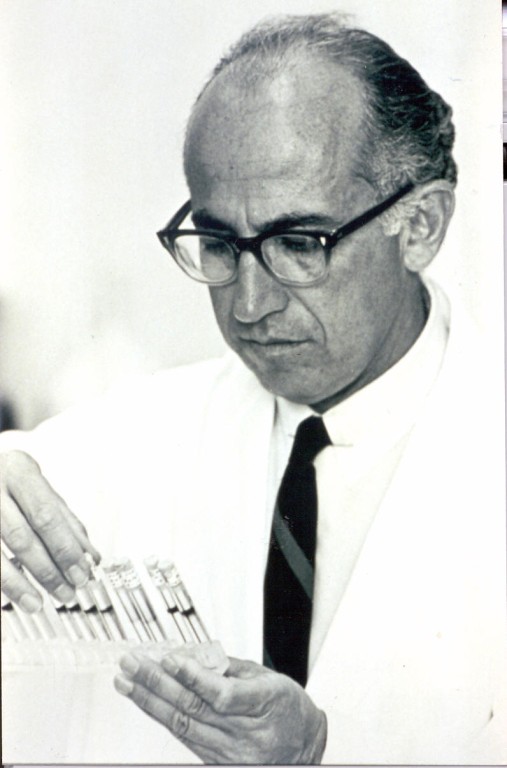
Jonas Salk has been named a ‘miracle worker’ in the years since the development of his vaccine. The inactivated vaccine became an obsession of his. Through $66 million of funding to help develop the vaccine, it went from testing on children in mental institutions in Rhode Island and Pennsylvania (a common theme in the 1950s), to his own children, and then onto millions of volunteers named ‘polio pioneers’ by the press. It was a success and in 1955, the vaccine was added to the World Health Organisation’s List of Essential Medicines.
Two years later, the number of cases in the US dropped from almost 60,000 to less than 6,000 and a decade later, less than 200. Salk had done it, he had successfully paved the way to the eradication of polio but this is not why he is held in such esteem.
Salk, from the development of essential medicine, could have become one of the richest scientists to exist, but due to the experiences he had with the disease during the development of the vaccine, he decided to not patent the vaccine and therefore sell it at no extra cost. This single decision meant that a major barrier to vaccine manufacturing, and licensing, wasn’t a worry for countries and individuals around the world.
Forbes, in 2012, calculated that Salk forfeited almost $7 billion in lost earnings due to refusing to patent the vaccine. A number that many would see today and be a lesser man than Salk and do it not for the benefit of mankind, but for the potential financial benefits such an invention affords an individual.
When asked in an interview about who owned the patent, Salk replied “Well, the people, I would say. There is no patent. Could you patent the Sun?”
In the years since the development of the Salk vaccine, there was the development of another – the Sabin vaccine developed by Albert Sabin.
The vaccine developed by Sabin is a live-attenuated vaccine that was administered orally and could even be given in a sugar cube and had longer-lasting effects. Due to the ease of the administration, it became the go-to vaccine in the late 1960s and up to the early 2000s. Even though it is Salk that is given much of the credit for eradication, it is this vaccine that made leaps towards getting us there.
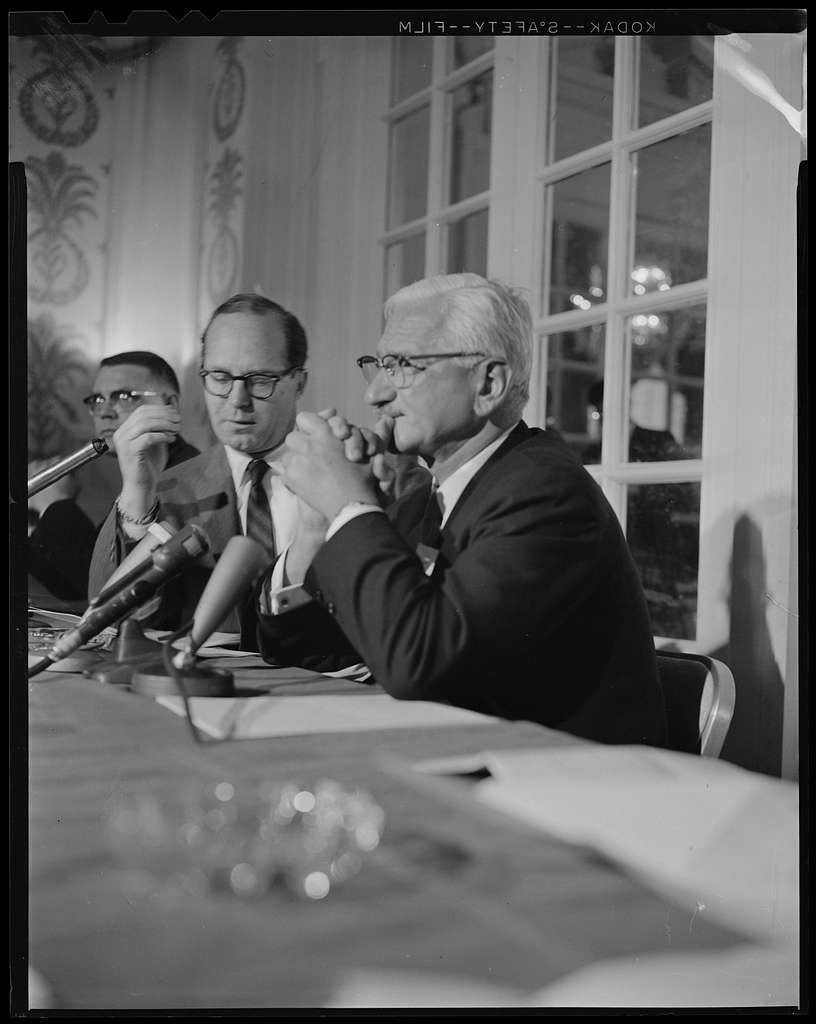
In 1980, only 22% of the world’s 1-year-olds were vaccinated against polio with around 300,000 to 400,000 cases documented around the world. Today, almost 90% of the world’s 1-year-olds are vaccinated against polio and the number of cases fell to just 36 in 2020 according to data from the Polio Global Eradication Initiative.
This does not mean the fight is over. Polio currently only circulates in two countries, Afghanistan and Pakistan. Here, there has been an increase in vaccine-derived poliomyelitis. This is caused by mutations in the live-attenuated oral Sabin vaccine that allow it to attack the central nervous system and lead to patients developing polio. For this reason, many countries in the early 2000s switched from the Sabin vaccine, back to the Salk vaccine. The rates were now low enough that the weaker protection from the Salk Vaccine was enough to protect all individuals.
For countries where accessibility is difficult, they must continue to rely on oral vaccines and their vaccine-derived mutation.
Various efforts continue to be made in regard to polio but with cases falling over the decades, it is possible that we could see the second eradication of the disease since smallpox in 1980. To look for the next eradication of another scourge of the world, it may take an individual, group, company, or government to come together, not to make money from the invention, but to learn a lesson from Jonas Salk and do it for the whole of mankind.
sources.
Baicus, A. (2012) “History of polio vaccination,” World Journal of Virology, 1(4), p. 108. Available at: https://doi.org/10.5501/wjv.v1.i4.108.
Breen, G.E. and Benjamin, B. (1950) “Poliomyelitis in London in 1949,” BMJ, 2(4695), pp. 1473–1475. Available at: https://doi.org/10.1136/bmj.2.4695.1473.
Dattani, S. et al. (2022) Polio, Our World in Data. Available at: https://ourworldindata.org/polio.
Galassi, F.M., Habicht, M.E. and Rühli, F.J. (2016) “Poliomyelitis in ancient egypt?,” Neurological Sciences, 38(2), pp. 375–375. Available at: https://doi.org/10.1007/s10072-016-2720-9.
Monro, I.C. (1949) “Poliomyelitis in a rural Scottish County, 1947, 1948 and 1949,” Public Health, 63, pp. 215–220. Available at: https://doi.org/10.1016/s0033-3506(49)81655-6.
Paul, J.R. (1971) A history of poliomyelitis. New Haven: Yale University Press.
Polio now (no date) GPEI. Available at: https://polioeradication.org/polio-today/polio-now/.
Poliomyelitis (no date) World Health Organization. World Health Organization. Available at: https://www.who.int/teams/health-product-policy-and-standards/standards-and-specifications/vaccines-quality/poliomyelitis.
Quora (2021) How much money did Jonas Salk potentially forfeit by not patenting the polio vaccine?, Forbes. Forbes Magazine. Available at: https://www.forbes.com/sites/quora/2012/08/09/how-much-money-did-jonas-salk-potentially-forfeit-by-not-patenting-the-polio-vaccine/.
 inquestion.
[…] find Hinterland interesting. However, it is often the case that pupils remember that Jonas Salk gave the patent for his invention of the polio vaccine away for free (Hinterland) rather than how vaccines work with the immune system to develop antibodies in the […]
LikeLike