
The International Nuclear Event Scale lists around six nuclear disasters at the top end of its Level 1 to Level 7 categorising system. At the top of this scale, Level 7, of course, sits the now infamous Chernobyl and Fukushima Daiichi nuclear power plant disasters occurring in present-day Ukraine and Japan, respectively.
Some recognise others on the scale, such as Three Mile Island in the USA but as this occurs in a ‘Western’ nation, it has been covered on the news countless times and it even has a Netflix series: ‘Meltdown: Three Mile Island‘.
Despite the seriousness of a nuclear disaster, however, there are many on the list that many are unaware of. Usually, this is due to them occurring far from large populations and neighbouring countries, meaning it was easy to keep under wraps. For example, the Level 5 ‘Kyshtym disaster’ occurred in the Soviet Union in 1957, hidden to ensure their technology remained out of the hands of the Americans.
The excuse of hiding it from the Americans is understandable in the Cold War era Soviet Union but it fails to explain why, in the same year as the Kyshtym disaster, the United Kingdom also experienced its own Level 5 nuclear incident that received its own level of government-sponsored silence.


Known at the time as Windscale, it is located around 20 kilometres from the tallest mountain in England, Scafell Pike. It consisted of two almost 200-ton nuclear reactors, known as the Windscale Piles.
The aim of the Windscale site was to produce Plutonium-239 for the British to independently develop their own nuclear weapons in the late 1940s and early 1950s. Due to distrust forming in the UK’s nuclear establishment, the USA ceased sharing its atomic secrets with any country with the passing of the Atomic Energy Act in 1946.
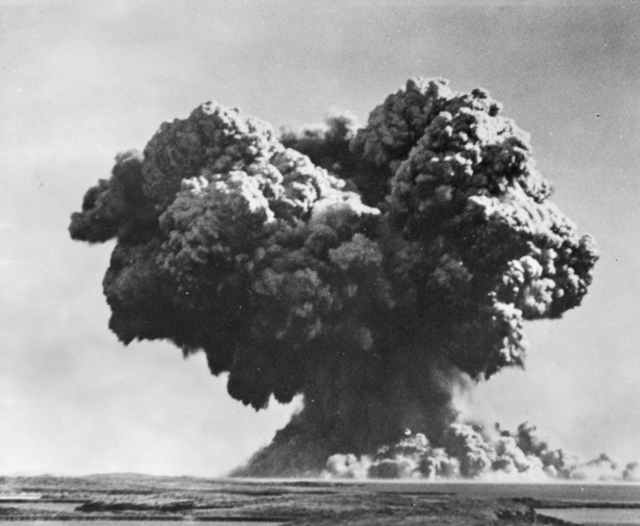
In 1952, Windscale achieved its original aim with the UK detonating its first nuclear weapon (known as Operation Hurricane) off the coast of Western Australia, and with it, Britain became the world’s third nuclear state. But, as can often be the case with nuclear, it was not plain sailing for Windscale.
In October 1957, the temperature of one of the reactors was steadily increasing and it was necessary to anneal the graphite moderators stabilising the reaction. Annealing is the process of alleviating Wigner energy (which is a great word to say out loud because people think you’re making it up). This build-up in energy is caused by the repeated bombardment of a solid’s atoms by neutrons. This causes the lattice structure of the material to be disrupted, thus giving atoms more energy than usual. In order to alleviate this the graphite moderators have to be heated to around 250°C.
What should have happened during the annealing was the temperature of the reactor should have decreased relatively evenly, as it had done 8 times in the past, but this time was different. One of the channels kept increasing in temperature. Engineers at Windscale believed this was due to an excess of Wigner energy in that one channel but they were wrong. It was a fire.

Unaware of the cause, scientists had done the logical thing of increasing the speed of the cooling fans to near-gale force speeds in an attempt to cool the reactor, but this made the situation worse by fanning the flames. It was only when a worker coming to the site saw smoke coming out of the chimney did they begin to investigate and it wasn’t until two days later that they understood what was causing the temperature increase.
Thomas Tuohy, the Deputy General Manager at Windscale and the man in charge during the incident, bravely climbed 80ft in the air to get a further understanding of the situation. Looking directly into the pile, he saw flames billowing out of the chamber and a white-hot glow of almost 1,200°C – pushing dangerously close to the melting point of steel. If a temperature of 1,300°C was reached it could cause a meltdown thus devastating a large part of North West England.
In an attempt to cool the reactor, Thomas Tuohy ordered 25 tons of liquid carbon dioxide to be poured onto the rods but to no effect. The next option was to pour water directly onto the reactor. Even with a risk of a hydrogen explosion, the number of options available was limited and it seemed like they had no choice.
Thankfully, pouring water onto the reactor did not cause an explosion but it also did nothing to alleviate the temperature issues inside the reactor.
Tuohy ordered all but a small number of engineers and firefighters out of the site for their own protection as he ordered the fans (that were unknowingly fanning the flames) to be turned off but to also keep the water flowing.
It worked.
The temperatures of the reactor decreased and as the water continued flowing for the next 30 hours, scientists could observe the damage caused by the incident.
During the initial incident and the proceeding fire, millions of radioactive isotopes were released into the atmosphere including 740 terabecquerels of Iodine-131 (half-life ~8 days), and 22 terabecquerels of Caesium-137 (half-life ~30 years) as well as many other radioisotopes. All of these have negative effects on the human body with Iodine-131 a particular danger as it is taken up by the thyroid and increases the incidence of thyroid cancer.
In total, the release of radioactive isotopes, by government estimates, led to an increase of 100 cancer fatalities, as well as 100 non-fatal cancers and 10 hereditary defects. Even today reports of numerous disorders potentially being caused by the events at Windscale with individuals and organisations requesting Government support.

As the UK wanted to resume the sharing of nuclear secrets with the United States, news of Windscale becoming public thwart this plan. To mitigate this, the blame was passed off as incompetence and the negative effects were downplayed with even news organisations unable to report too much on the incident. When the Penney Report was commissioned to look into the incident shortly after the incident, it was kept classified until 1988. Even today is incredibly difficult to get hold of having been withdrawn from the public record in 2002.
When thousands of gallons of milk were poured away at nearby farms, the Government stuck by its word that there was no harm to everyday people and the wasting of milk was just a precaution. Harold Macmillian, the Prime Minister at the time stated that the incident at Windscale was a result of staff failings and blamed an error of judgement by the plant workers. This was untrue.
The issues at Windscale were due to its design. These flaws were a result of the pressure put on engineers during its construction. The UK government was determined to detonate its own nuclear weapon and it would achieve it at any cost. Whilst at the time they were unaware of the issues when disaster struck, they were swept under the rug.
There has yet to be an official apology from the UK government for Macmillian’s false comments.
Even before the fire, the nuclear site at Windscale continued to be a bastion of nuclear physics at the time with the creation of the world’s first nuclear power station built to supply electricity to a grid. In 1981, the site changed hands and was renamed Sellafield, the name it still possesses today and has since become the epicentre of the UK’s nuclear research. Since 2018, the site has been owned and run by the Nuclear Decommissioning Authority, itself owned by the UK Government, with the aim of fully decommissioning the site, something that will take the next 100 years to fully complete.
Even though it has been 70 years since the UK detonated its first nuclear weapon in October 1954, the remnants of this momentous development still affect us today. With numerous issues with the Sellafield site, including the leaking of irradiated water into the environment, it is clear that the race for the bronze medal of nuclear weapons will have lasting effects, centuries after those who envisioned it have long since gone.
 inquestion.